

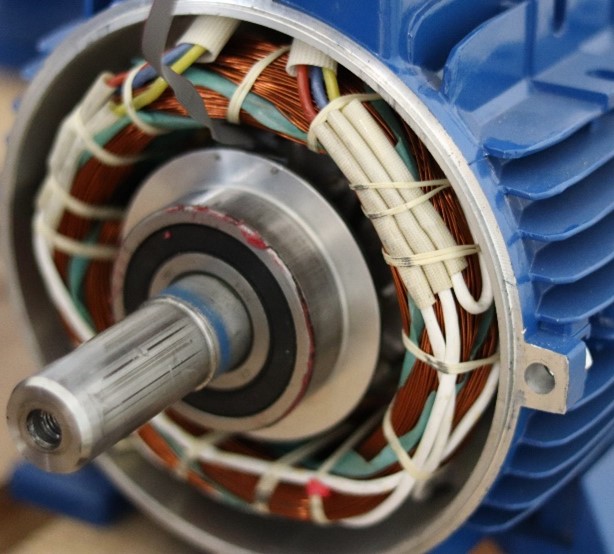
In various industrial applications, bearings play a fundamental role in ensuring the smooth and efficient operation of machinery.
Bearings are mechanical components that support rotating or oscillating shafts, reducing friction and allowing the transmission of torque or forces with minimal energy loss. However, like any mechanical component, bearings have a limited service life and require proper analysis to determine their expected duration. The main tool for bearing life analysis is defined by the ISO 281 and ISO 16281 standards, which allow for the estimation of a bearing’s useful life.
The service life of a bearing is defined as the operational duration until a predefined failure criterion is reached. Bearing failure can manifest in various forms, such as excessive wear of rolling elements and fatigue raceways, deterioration of the lubricant (grease/oil), seizing due to excessive contamination, or sudden breakage of one of the components. It is essential to accurately estimate bearing life to ensure optimal performance, prevent unexpected failures, and effectively plan maintenance interventions.
The ISO 281 standard specifies the calculation method for the basic rating life of bearings based solely on the bearing design, applied loads, and rotational speed. The basic rating life represents the number of revolutions or operating hours a bearing can withstand before the first signs of fatigue wear appear in the inner ring raceway. To obtain a realistic modified rating life that takes boundary conditions into account, it is necessary to consider all the following factors included in the ISO 16281 standard:
- Dynamic load capacity (C): Dynamic load capacity depends on various factors, including bearing type, dimensions, geometry, and material properties.
- Applied load or duty cycle.
- Rotational speed.
- Operating conditions: several environmental factors are involved, such as lubrication conditions, temperature ranges, contamination, and operating clearance. These operating conditions significantly influence bearing life and must be taken into account during analysis.
Applying the ISO 16281 calculation during the design phase of a new project brings numerous benefits to manufacturers, engineers, and end users:
- Accurate bearing selection: By following ISO 16281 guidelines, engineers can precisely estimate bearing life based on specific application requirements, allowing them to select the most appropriate bearing type and adequate lubrication.
- Optimal performance and reliability: Understanding the expected operating life of bearings ensures they are used within their intended service life, minimizing the risk of premature failure and associated downtime. This leads to increased reliability and improved machinery performance.
- Maintenance planning: With a clear understanding of bearing life, maintenance interventions can be planned more effectively, optimizing downtime and reducing maintenance costs.
- Improved product development: Manufacturers can use ISO 16281 standards during the product development phase to evaluate and compare the performance of different bearing solutions, materials, and lubrication options.

Conclusions
Bearing life analysis is a fundamental aspect of ensuring efficient machinery operation across various industrial sectors. The ISO 16281 standard provides valuable guidelines for evaluating the expected operating life of radial needle roller bearings. By considering factors such as dynamic load capacity, equivalent load, operating conditions, and statistical analysis, engineers can make informed decisions regarding bearing selection, maintenance planning, and product development. Compliance with ISO 16281 standards ultimately leads to improved reliability, optimal performance, and cost-effective operations in industrial applications.


